



Why We Run a Four-Year Fleet Replacement Cycle
Maintenance compounds. So does downtime. Here is the reasoning behind our 95%-under-four-years fleet policy and what it means for your shipments.
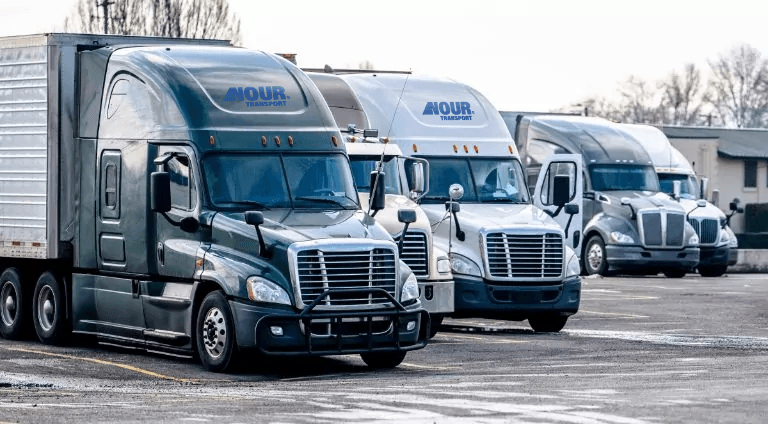
Most carriers we compete against run a 7-to-10 year fleet replacement cycle. We run a four-year cycle. The math behind that choice is the single most important operational decision we make, and it's the reason 95% of our fleet is always under four years old.
Here's why we made that call — and what it actually means for the freight you put on our trucks.
Mechanical risk compounds non-linearly
A two-year-old reefer trailer has roughly a 1% chance of a mechanical incident on any given long-haul. A five-year-old unit has roughly a 4% chance. A seven-year-old unit has roughly an 11% chance. The curve isn't a straight line — it's exponential, because old components stress younger components around them. A four-year cap keeps us on the flat part of that curve.
Downtime doesn't just cost the day the truck breaks
When an older truck goes down, the visible cost is the tow + the repair. The invisible cost is the customer that had to be re-booked, the appointment that got missed, the driver who lost a full day of paid hours, and the next customer who heard about it. We measured this internally: a single roadside breakdown costs us roughly 4× the direct repair bill in downstream impact. A four-year cycle drives those breakdowns to a level where they barely register.
Fuel economy improvements compound, too
Each model year of Class 8 truck is meaningfully more fuel-efficient than the one before it. A 2024 unit running an interprovincial route burns 8–11% less fuel than a 2018 unit doing the same work. Over four years that gap reaches double-digit operating cost difference — which more than offsets the higher depreciation on a newer fleet.
Driver experience and retention
Drivers prefer newer equipment. It's quieter, more comfortable on long hauls, has better safety tech, and breaks down less often. In an industry where the median driver tenure is under 18 months, our drivers average over 5 years with us — and a younger fleet is one of the reasons.
What it means for your freight
Nothing about this is marketing. The freight moving on a four-year fleet:
- Arrives on time more reliably (fewer breakdowns, fewer swaps, fewer delays)
- Stays in temperature spec more consistently (newer reefer units hold tighter set-points)
- Has better real-time telemetry coverage (older trucks predate the current telematics standard)
- Generates better proof-of-delivery documentation (modern in-cab tech captures more handoff data)
The four-year cycle costs us money on the capital-allocation side. It earns it back many times over on the reliability side. That trade-off is the operational core of how we run.