
The Future of Temperature-Controlled Freight in Canada
From sensor-driven trailers to greener refrigeration units, here's how Canadian temperature-controlled freight is evolving in 2026.
Canadian cold-chain freight is in the middle of a slow but decisive shift. The diesel-reefer, paper-BOL, "call us when it gets there" model that defined the industry for thirty years is being replaced — quietly, lane by lane — by something that looks more like a connected manufacturing line than a trucking operation.
Here are the four trends our operations team is tracking the closest as we head into the next freight season.
Sensor-saturated trailers
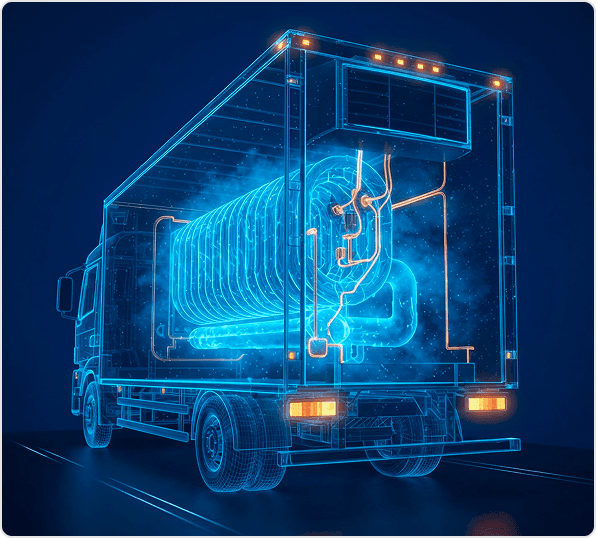
Until recently, a reefer trailer had one temperature sensor — usually mounted near the evaporator coil — and that single reading represented the entire load. New units coming off the line in 2026 ship with 6–12 sensors distributed through the box, plus humidity and door-cycle telemetry. The result: you can finally distinguish a hot pallet from a hot trailer, which used to be a guess on every claim investigation.
Electric and hybrid reefer units
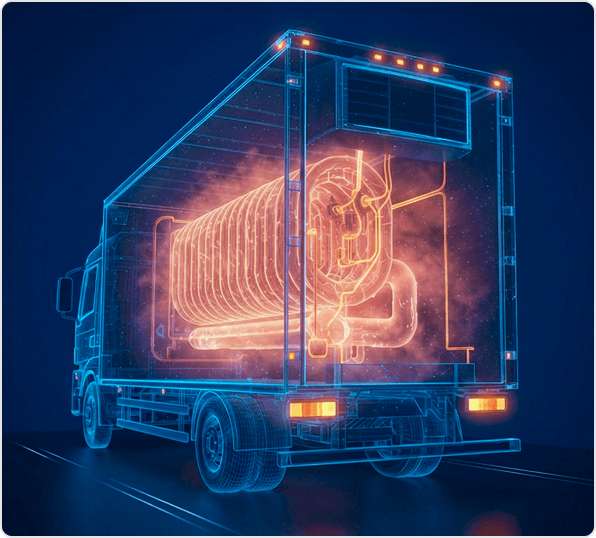
Battery-electric and diesel-hybrid TRUs are no longer pilots. They're commercial freight units running real lanes, and the math is starting to work — particularly on local urban routes where the duty cycle plays to electric strengths. The interprovincial 53-foot trailer is still diesel for now; that changes the moment battery density passes 600 Wh/kg.
Predictive ETAs instead of static transit times
The "we'll be there Thursday at 14:00" promise is being replaced by a live ETA that updates every five minutes based on traffic, weather, hours-of-service, and historical lane performance. Shippers who get used to predictive ETAs stop accepting static ones — and the carriers that can't provide them lose the lane.
Carbon reporting baked into the BOL
Customers with public sustainability targets — increasingly the rule, not the exception — now expect a per-shipment CO₂e figure delivered alongside the proof of delivery. The carriers that can produce that line item without a separate billable consulting engagement will own the corporate-shipper market by 2028.
None of these are speculative. Every one of them is already running in our fleet today, or is on a 12-month roadmap. The carriers that don't keep pace are about to find out what happens when "good enough cold chain" stops being good enough.